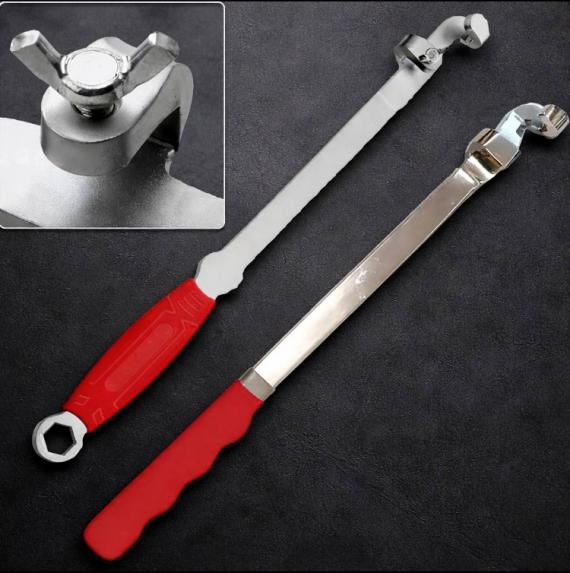
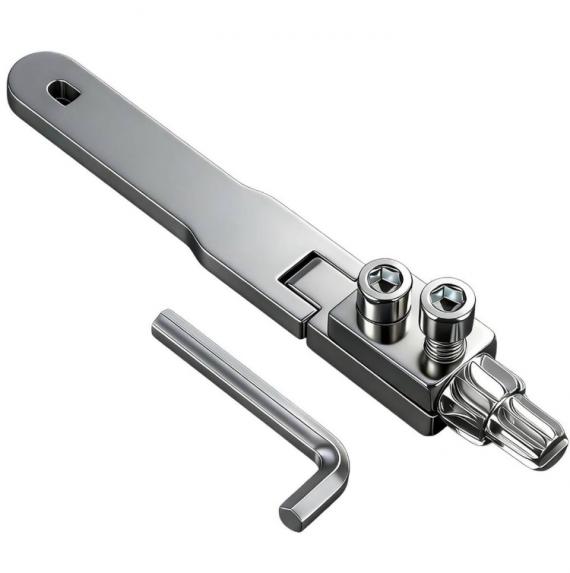
The image depicts an example of a basic manual hand riveter also referred to as a rivet gun or pop rivet tool that is used extensively throughout many industries including but not limited to, metal fabrication, automotive repair, woodworking and household DIY projects. A tool designed to fasten two separate materials together permanently using no welding or soldering methods, the reliability, simplicity, and durability of the hand riveter make it a staple within each industry.
Design and Key Features of the Hand Riveter:
Grips - Ergonomic grips provide comfort and security while gripping the riveter due to the application of non-slip rubber cushions. Finger groves provide ergonomic support to hands which can become fatigued after extended periods of operation allowing maximum leverage force to be applied at a minimum level of physical exertion.
Construction - Made from durable alloy steel, the matte black body of the hand riveter has been constructed to withstand extremely heavy levels of torque and impact. In addition to resisting wear, corrosion and bending due to overworked conditions the body is also resistant to damage caused by excessive usage.
Nosepiece Heads - Interchangeable nosepiece heads are located along one side of the frame of the hand riveter. Each head is held in position by a nut threaded onto the end of the respective nosepiece. Users can easily switch between different rivet diameters providing versatility for a variety of fasteners.
Safety Lock - At the bottom of the grip there is a metal clip or safety loop which locks the tool closed preventing accidental activation of the tool when storing it away in your tool box or carrying case.
Practical Uses for a Hand Riveter:
A hand riveter will assist you with virtually all aspects of working with metals. For instance, if you are required to attach sheet metal, fix a car bumper, repair HVAC ductwork, install new gutters or assemble metal furniture, a hand riveter is necessary. To operate a hand riveter insert a blind rivet into a predrilled hole and squeeze the handle down creating pressure on the mandrel. The mandrel then travels through the blind rivet's body expanding it on the opposite (blind) side. Once expanded and secured, snap off the remaining excess pin and you have created a solid, clean and efficient joint.
Regardless of whether you are a professional trade person or an avid home DIY enthusiast having a reliable hand riveter will ensure that every fastening project results in clean, permanent and efficient joints.
[DISCLOSURE]
I earn from the qualifying purchases as a Amazon Associate.